Fatty Liver

Fatty Liver

Services

FibroScan

to assess the presence and extent of liver scarring (fibrosis)

Assessment

of fatty liver disease stage and differentiation between simple MAFLD and MASH

Advice

for the management of Metabolic Associated Fatty Liver Disease

Assessment

for cardiac disease due to fatty liver

Access

to drug and lifestyle trials for new MAFLD treatments

Fatty Liver

We have become accustomed to hearing about the effects of unhealthy eating habits and being overweight on the heart. Poor eating habits and being overweight may also harm the liver.

Fatty liver or Metabolic-associated Fatty Liver Disease (MAFLD) is a term used to describe a condition caused by the build-up of fat in liver cells. A liver normally contains a certain amount of fat, but if fat represents more than 5% of the weight of the liver, that person is said to have “fatty liver” or steatosis.

Fatty liver is a common condition that affects 1 in 4  European adult populations. It is the most common cause of chronic liver disease in developed countries. It is considered to be the hepatic manifestation of the metabolic syndrome.

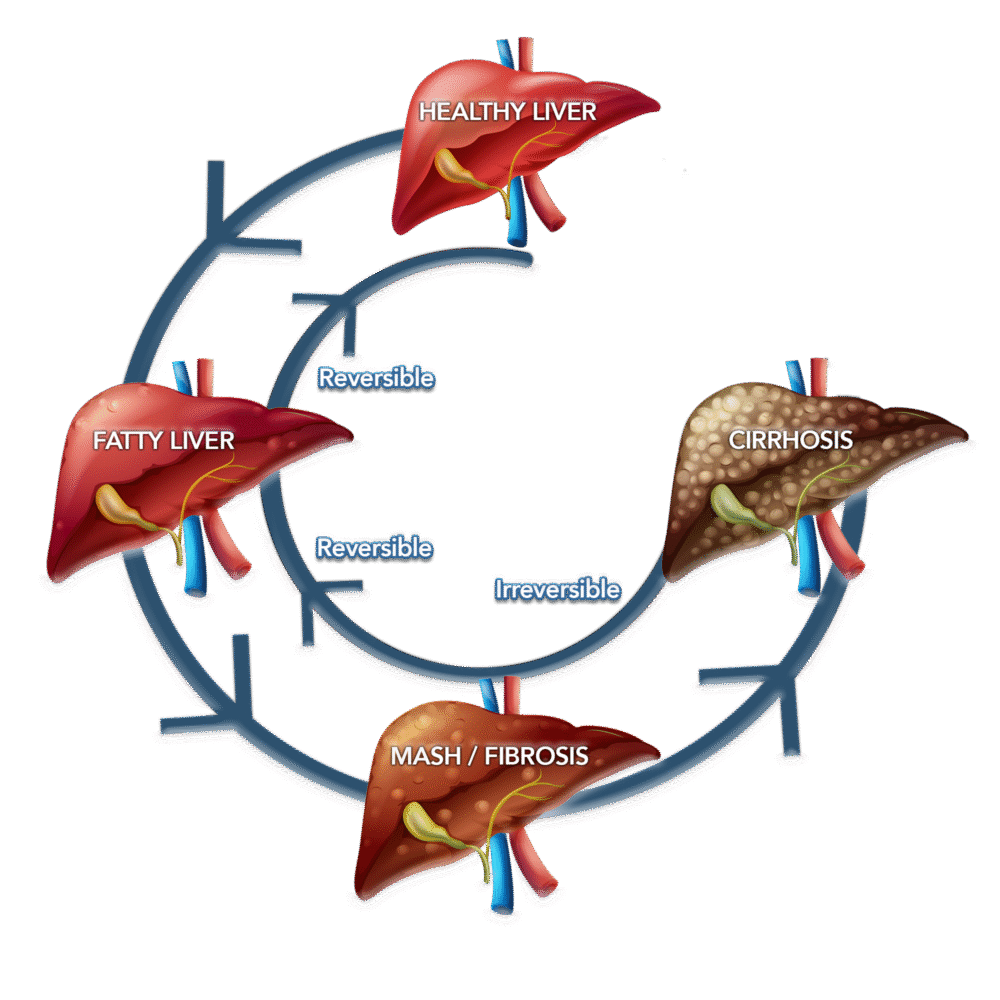
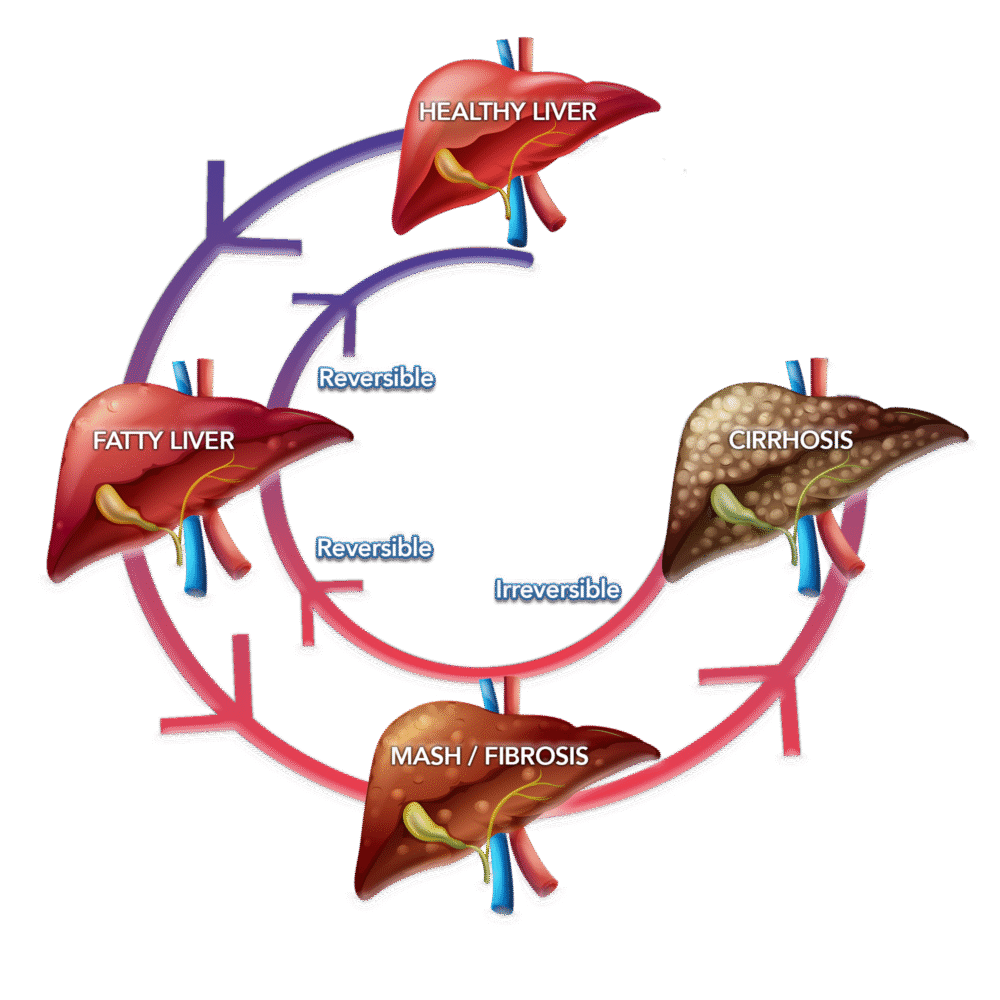
MAFLD presents as two distinct forms: simple steatosis (fat), and steatohepatitis or MASH or metabolic-associated steato-hepatitis (fat and inflammation), where fat in the liver results in cellular changes and reactions that results in  inflammation. MASH is a more aggressive form of the condition, and some patients with MASH develop fibrosis, where the persistent inflammation in the liver results in the generation of fibrous scar tissue around the liver cells.

MAFLD  Facts

  • Image
    MAFLD is a common condition that affects up to 25% of the adult population and has become the most common cause of chronic liver disease in developed countries.

  • Image
    MAFLD is defined as an excess of fat in the liver in the absence of excess alcohol intake.

  • Image
    MASH may lead to liver damage and scarring (fibrosis) and, if untreated over time, may lead to cirrhosis of the liver.

  • Image
    Approximately 20% of patients diagnosed with MAFLD will develop fat-related inflammation of the liver, called Metabolic-associated Steato-Hepatitis (MASH).
MAFLD  Facts

  • Image
    Patients with MAFLD frequently have no symptoms other than chronic fatigue.

  • Image
    Several factors increase the risk of developing MAFLD, including type 2 diabetes, being overweight/obese, high blood pressure, high cholesterol and high triglycerides.

  • Image
    Routine liver blood tests (LFTs) do not differentiate MAFLD from MASH or accurately stage fibrosis (liver scarring).

  • Image
    MAFLD can be prevented and/or reversed through lifestyle changes such as healthy eating, exercise and weight reduction.
MAFLD  Facts

  • Image
    Routine liver blood tests (LFTs) do not differentiate MAFLD from MASH or accurately stage fibrosis (liver scarring).

  • Image
    Several factors increase the risk of developing MAFLD, including type 2 diabetes, being overweight/obese, high blood pressure, high cholesterol and high triglycerides.

  • Image
    MAFLD can be prevented and/or reversed through lifestyle changes such as healthy eating, exercise and weight reduction.

  • Image
    Patients with MAFLD frequently have no symptoms other than chronic fatigue.

  • Image
    MAFLD is defined as an excess of fat in the liver in the absence of excess alcohol intake.

  • Image
    Approximately 20% of patients diagnosed with MAFLD will develop fat-related inflammation of the liver, called Metabolic-associated Steato-Hepatitis (NASH).

  • Image
    MASH may lead to liver damage and scarring (fibrosis) and, if untreated over time, may lead to cirrhosis of the liver.

  • Image
    MAFLD is a common condition that affects up to 25% of the adult population and has become the most common cause of chronic liver disease in developed countries.

The Spectrum of MAFLD
Image
The Spectrum of MAFLD
Image

Frequently Asked Questions